What is CMS? Headless vs Traditional
I’m a Software Developer with a strong foundation in building scalable, accessible, and inclusive products across both early-stage startups and enterprise environments. My experience spans backend-heavy systems, real-time data pipelines, and internal tooling that drives measurable impact.
I currently work at WorkIndia as a Software Development Engineer, where I help design and build robust backend systems, real-time data pipelines, and automation tools that power one of India’s largest job platforms. Previously, I interned at Microsoft and Raven (YC S22), where I contributed to building end-to-end, production-ready features that significantly improved product performance and operational efficiency.
Outside of work, I’m building Evolv, a fitness app designed to go beyond tracking, helping users build intentional workout rituals backed by meaningful insights. It’s been an exciting journey bringing product thinking and engineering together to solve a deeply personal problem.
🧠 Leadership & Mentorship Mentoring junior developers and interns, helping them grow technically and align with real-world engineering best practices.
💡 Community & Communication Beyond code, I’m a people-first engineer. I’ve led developer communities, such as the Google Developer Student Club at university, scaling it to over 2,000 members. I’ve spoken at tech events and enjoy sharing ideas, whether through talks or writing. I also maintain a blog where I explore both the technical and human side of software development.
🛠️ Technical Interests Backend systems • Event-driven architecture • Real-time data pipelines • Internal developer tools • Automation • Platform thinking
Suppose you want to build a website, let's say a blogging site one way is to build it from scratch using HTML, CSS and Javascript, building the database and stuff. Here you have to handle everything by yourself. Now what if you are not familiar with these technologies, Are you going to learn all these things just to build your brand's website? Well, you can but it's not a feasible option. So, here comes the CMS.
In this article, we will look into CMS and talk about Headless and Traditional CMS.
What is CMS?
CMS stands for content management system. CMS provides all the tools to manage content, and users and apply beautiful ready layouts to your websites. WordPress is a good example of a CMS which provides you with plenty of plugins to make things work in your way and also thousands of free themes available on the web.
Do you know? 43% of the web uses WordPress.
However, whenever someone is talking about CMS the popular name arises - HeadLess CMS. Now before coming on this let's first look at Traditional CMS'.
Traditional CMS
Traditional CMS's are mainly built for the website they give us the comfort of having all the content and the editing interface templates in custom code in a single environment. Traditional CMS is a pillar that connects the front-end and the back-end of a website in a neat and easy code base. They contain everything from the database for the content all the way up through the presentation layer.
In Traditional CMS-
- Entire site is served from a single system.
- It is easy to manage all content.
- Themes and templates are used to control Front-end.
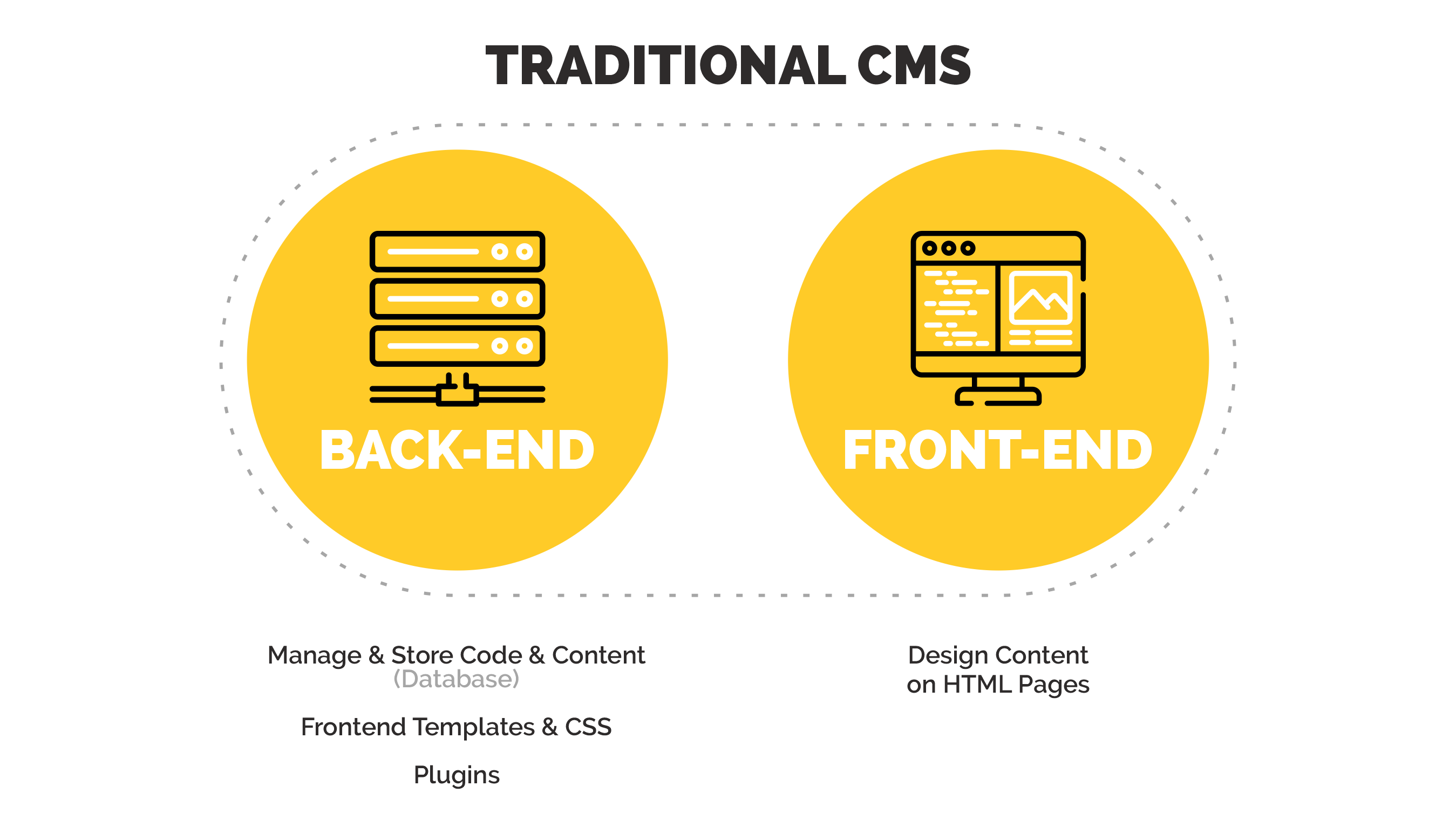
WordPress is a traditional CMS.
We've been using content management systems (CMS) for more than 20 years however the world is changing today we live in the mobile era. We have seen a growth in the use of communication channels including Internet of Things devices, digital assistants and virtual reality. Now today content can be displayed on any device using any format. However, traditional CMS was never designed to cope with that and we need a new breed of CMS, one that can make the content available through any channel and here's where headless CMS comes in.
Headless CMS
Headless CMS allows you to focus on what's important - managing the content and delivering it to any channel and at the same time it doesn't try to control your presentation it only provides the content through its API and that makes it so much better. The API makes content available through any channel and on any device, you can write your website or mobile applications using any programming language and use your favourite tools and development process.
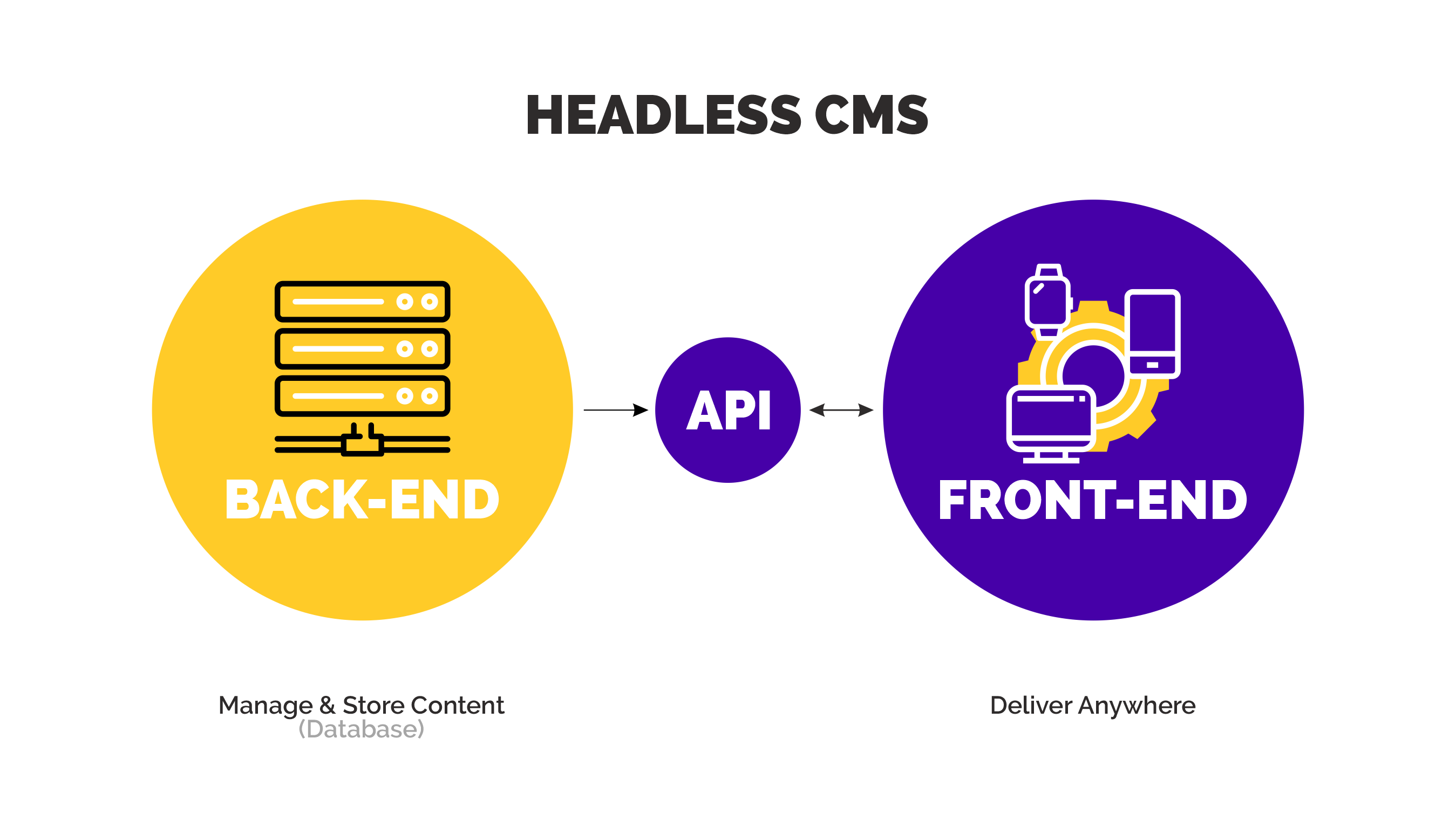
It also provides a higher level of security and much better scalability, the big advantage of the headless concept is that you can fully decouple CMS and use it as a cloud service and a cloud-first headless CMS means you can enjoy the best of headless and at the same time get all the benefits of the cloud. You could focus on your website or mobile app and let the CMS provider take care of everything else including availability and security performance.
This allows you to focus on the one thing that really matters creating smooth digital experiences for your customers.
Conclusion
Well, in the end, everything comes to one thing i.e. the use, for what problem you want a solution. Choose the one which is feasible and effective for you or your organization. However, I am biased towards Headless because of the flexibility it provides.